Loading…
Loading…
Day 2 of a 60-hour fast: momentum tricks, the second-night shift, and how to break the fast without undoing the work — with walking and calorie staging afterward.
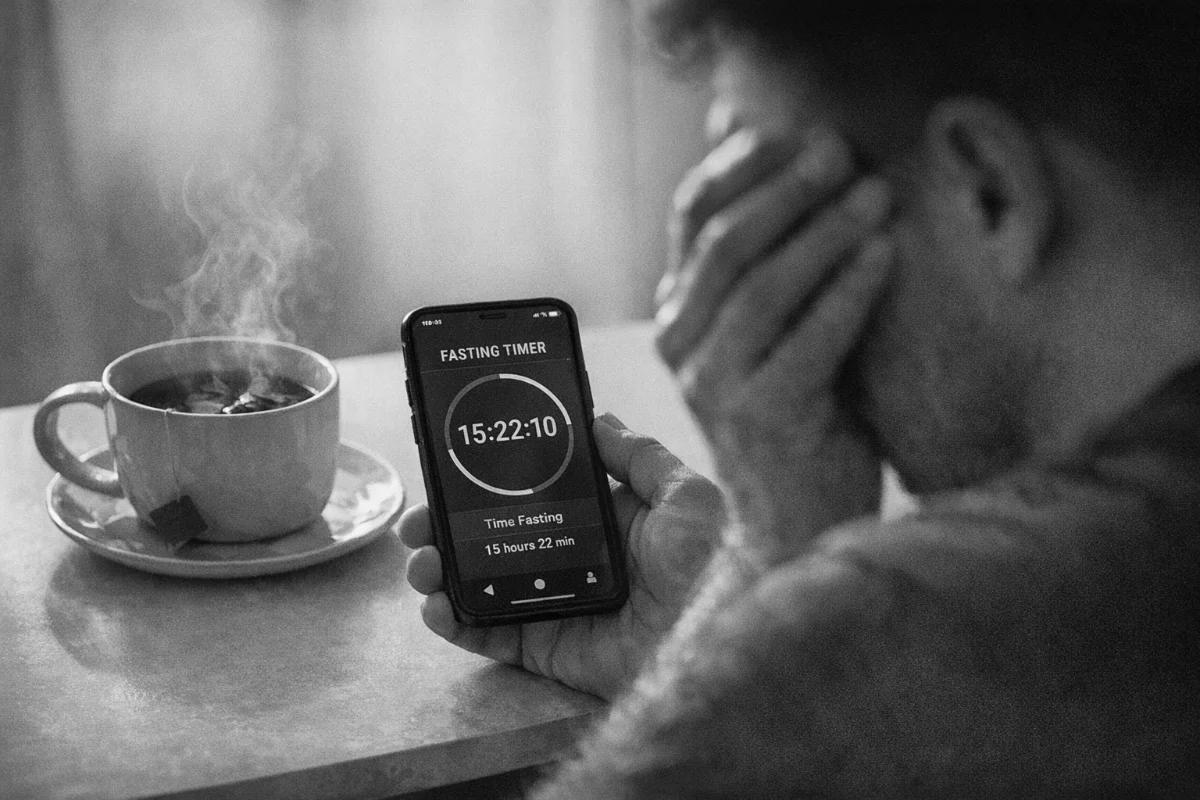
Embarking on the second day of a 60-hour fast often feels like a continuation of the initial day, with only slight differences. By now, you've acclimated somewhat to the fasting routine. A crucial tip for enhancing this experience is to begin the fast retroactively. This approach involves abstaining from late-night eating and deciding to start the fast the following morning. When you open your fasting app, set the timer to begin from the previous evening. This method can provide a psychological boost, as you might find yourself already 15 to 20 hours into the fast, creating a sense of momentum and progress as you near the 24-hour mark.
The first night of fasting tends to be manageable as your body is still processing leftover sugars. During this phase, your digestive system is clearing out, making the process feel more straightforward. As you enter the second day, staying occupied can help ease the experience. Engaging in work or following a routine keeps your mind off the fast, allowing you to remain in fasting mode without constant reminders. The app's timer serves as a subtle anchor, letting you check your progress without obsessing over it.
As you approach the 48-hour mark on the second day, you realize that another 12 hours will bring you to the 60-hour milestone. Traditionally, the second night is more challenging as your body shifts deeper into fat-burning mode, which can trigger hunger pangs and mood swings. It's common to experience emotional fluctuations during this time, and having understanding people around you or taking some quiet time can be beneficial.
Experience plays a vital role in managing these sensations. Knowing what to expect can transform the discomfort into something you observe rather than fear. This mindset shift from "I have to do this" to "I chose to do this" makes the fast more manageable. Planning the fast in advance also helps, as anticipation turns it into a deliberate choice rather than an obligation.
The FastNow app's scheduling feature supports this mindset by allowing you to plan extended fasts and challenges. Anticipation can make the process easier, but there's more to the second day than just waiting for the next milestone. As you reach the 60-hour mark, you have two options: continue to a full 72-hour fast if you're feeling well or stop around 60 hours and transition to a calorie-restricted phase of the program. Personally, I usually stop at 60 hours unless there's a compelling reason to continue, preferring to transition into controlled eating and move forward with the structured diet phase.
In past fasts, I've found small practical aids helpful toward the end. Salty pickles or pickle water can satisfy salt cravings, although they might contain small amounts of carbohydrates. Packaged soups, despite not being ideal, can serve as a bridge when nearing the fast's end, sometimes containing small pasta pieces. Over time, I've become more pragmatic about these choices, balancing strictness with practicality.
Cucumbers, too, are a simple way to introduce salt, though they should be consumed sparingly due to their carbohydrate content. For this fast, I've prepared these items in advance, storing them out of sight for when the fast concludes.
Breaking the fast will involve consuming about 500 calories on the first refeeding day, focusing on a single low-carb meal. This approach makes the fast feel almost like a 72-hour one, with a small, controlled meal introduced around the 60-hour mark. Calorie intake will gradually increase over the following days, moving through stages of 800, 1000, 1200, and up to 1500 calories by the end of the first week. After this transition, daily intake will stabilize between 1500 and 1800 calories for the remainder of the 90-day challenge.
Daily walking, typically burning around 400 calories in a 90-minute session, complements this plan. With an intake of 1500 to 1800 calories and regular walking, the expected daily calorie deficit should be around 500 to 700 calories, supporting steady progress toward the goal weight. The FastNow app will verify these numbers, ensuring the plan is followed, meals are logged, and life continues normally as the process unfolds.
Update:
If day one is novelty, day two is negotiation. Your brain will present very reasonable reasons to end early. Treat those thoughts as weather — observable, not automatically actionable.
Breaking a fast is not a reward window where calories do not count. It is the first meal of the next phase. If you want a clean mental model for first-meal structure, keep protein forward and portions honest — the same philosophy as what to eat after a water fast applies in spirit even when the fast length differs.
After longer fasts, movement is a mood stabilizer and a guardrail against “lying on the couch and spiraling.” You do not need to earn food with steps — you need steps so your nervous system remembers you are still a person who moves.
Extended fasts can be a tool. The backbone of the program is still repeatable structure: a fasting practice you can sustain, a calorie line you log, and walking you do not drop the moment life gets busy. Read the protocol if you want the full system in one place.
Is day two always harder than day one?
Often, yes — especially the second night. Not everyone matches the same timeline; experience reduces panic more than it removes discomfort.
Should I force 60 hours if I feel unwell?
No. Unwell means stop guessing and involve a clinician — especially if you have dizziness, fainting, chest pain, or anything that feels off.
Do pickles or soup “break” the fast?
Some people use small pragmatic bridges. If your goal is a clean fast window, anything with calories breaks the fast. Be honest about what you are doing and why.
What if I cannot walk 90 minutes?
Walk what you can repeat. Consistency beats a single heroic session.
What should I read next?
If you are building the behavioral foundation, how calorie deficits actually work and walking as a weight loss tool are the two posts that keep people from turning a fast into a binge-rebound story.
Day two is when your environment tries to pull you back into “normal eating” as if normal is neutral. Meetings run late. Someone offers food. Your phone pings. The fast is not harder because you are weak — it is harder because culture assumes constant grazing.
If you want to survive that, you need two things: a plan you can say out loud (“I am not eating until X”) and a way to not turn every social moment into a debate. You do not owe everyone a lecture. You owe yourself consistency.
Fat-burning shifts, sleep can be uneven, and your brain will sometimes misread low fuel as high drama. Walking is not punishment — it is a way to burn off some nervous energy without turning feelings into food arguments.
If you want to read more about the mental side of weight loss without turning it into therapy-speak, the mental side of losing weight pairs well with this practical fast journal.
Success is not a perfect refeed. Success is logging the refeed, keeping protein in the picture, and not turning a staged calorie increase into a free-for-all. The staged ramp is there so your body and your habits do not get whiplash.
I have done this before. That does not make it easy — it makes it recognizable. Recognition reduces panic. Panic is what makes people quit at hour 40 and call it failure. I am not interested in hour 40 heroics. I am interested in hour 90-day consistency.
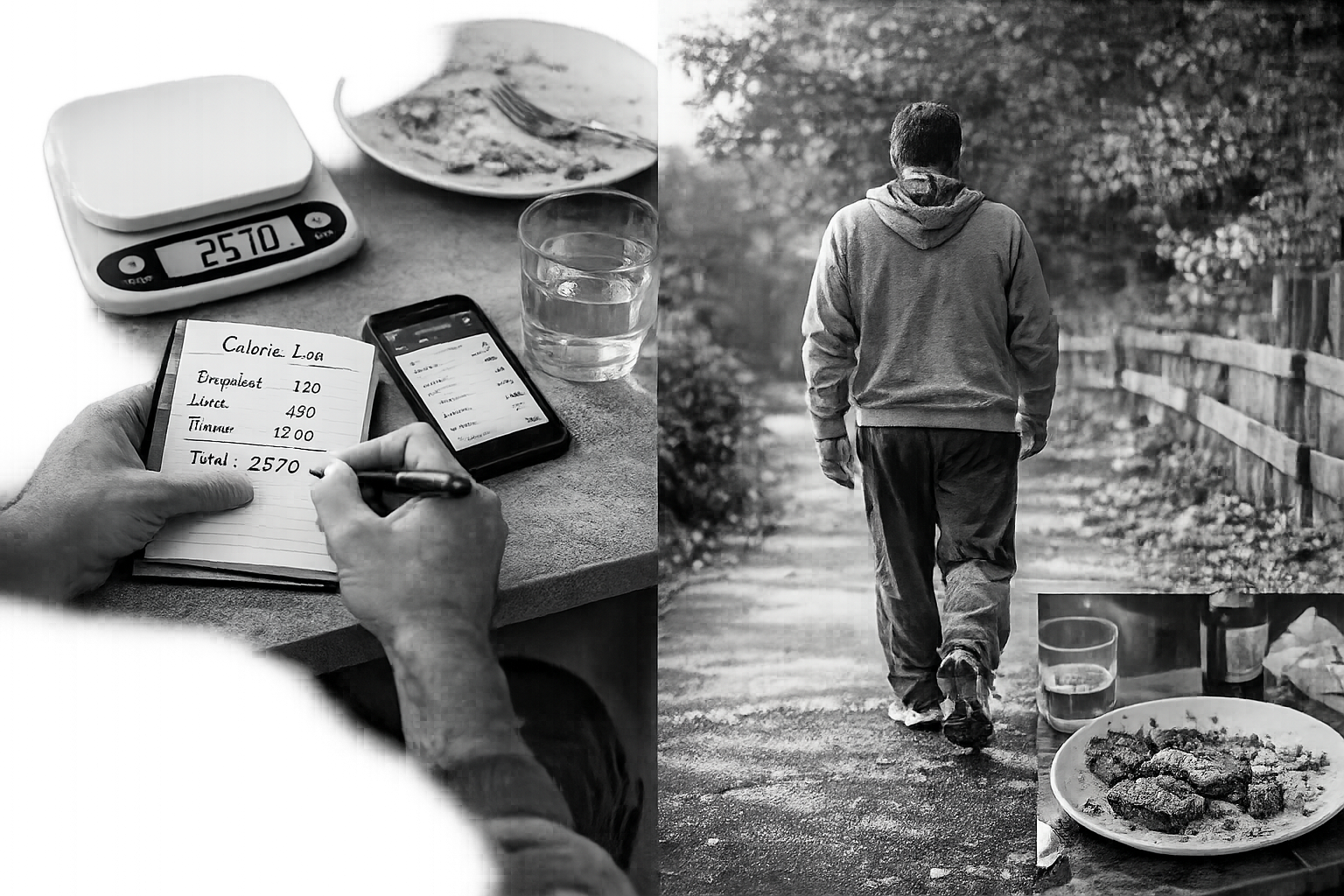
The boring middle of a 90-day plan is where people drift. This post names the moment, ties it to fasting + calories + walking, and gives concrete next steps.

Hard day in the ninety-day arc—extra carbs, rough mood, gray weather. Here is the FastNow move: close the story, protect the fast, walk, hit your normal calorie target tomorrow.
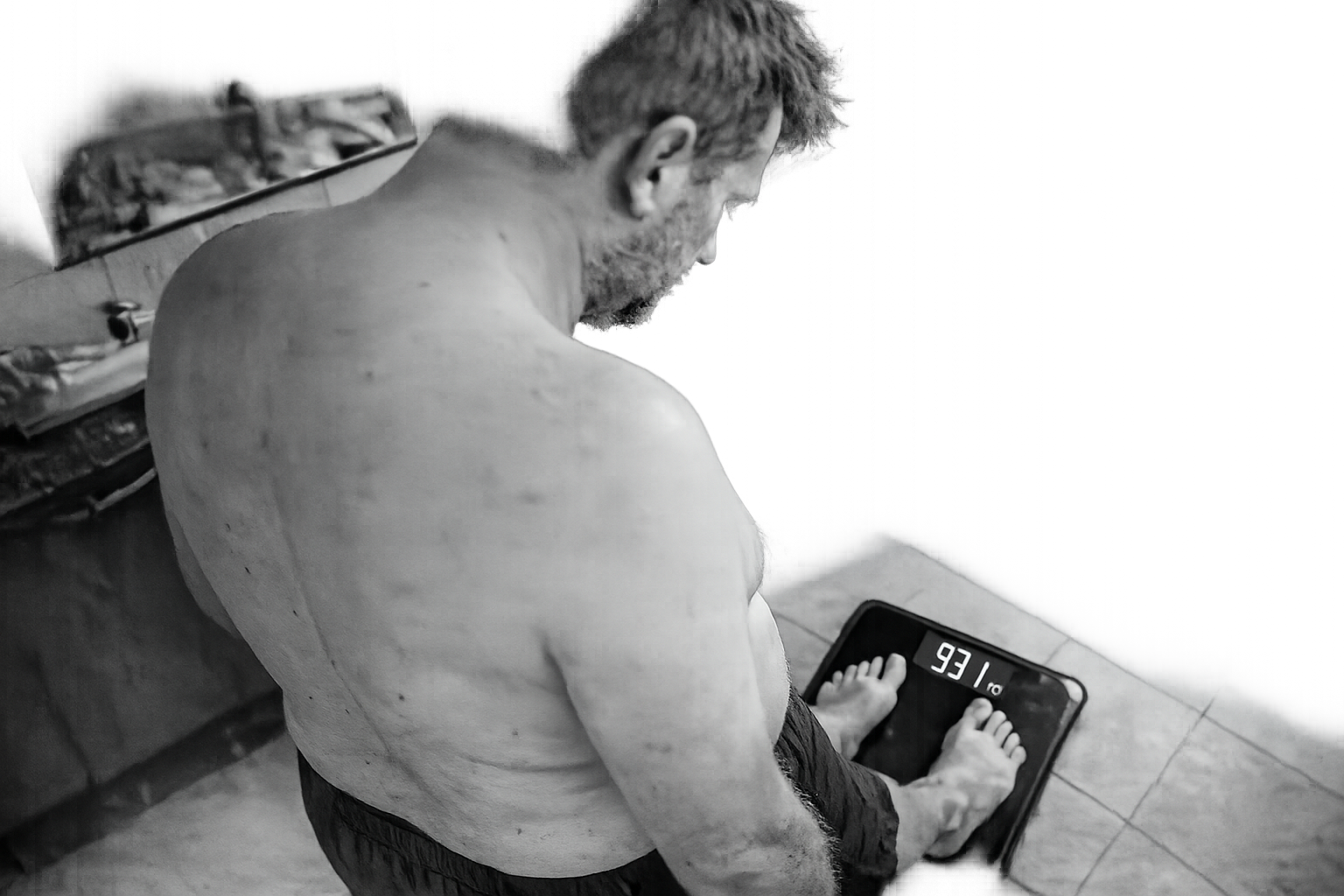
Mid-90-day reality check: stalls, doubt, then 93.1 kg after 96 kg—how FastNow’s fasting, calorie target, and walking turn patience into a visible break.

Early weight-loss momentum fades around day 16. Here is how to defend a real calorie deficit, keep your fasting window, and walk daily—without losing the plot.