Calorie Deficit
A calorie deficit is the basic condition required for fat loss. That does not make it exciting, but it does make it important. If your body is taking in less energy than it is using over time, stored body fat can come down. If that deficit is not there, fat loss does not continue no matter how clean, healthy, low-carb, or disciplined the diet sounds.

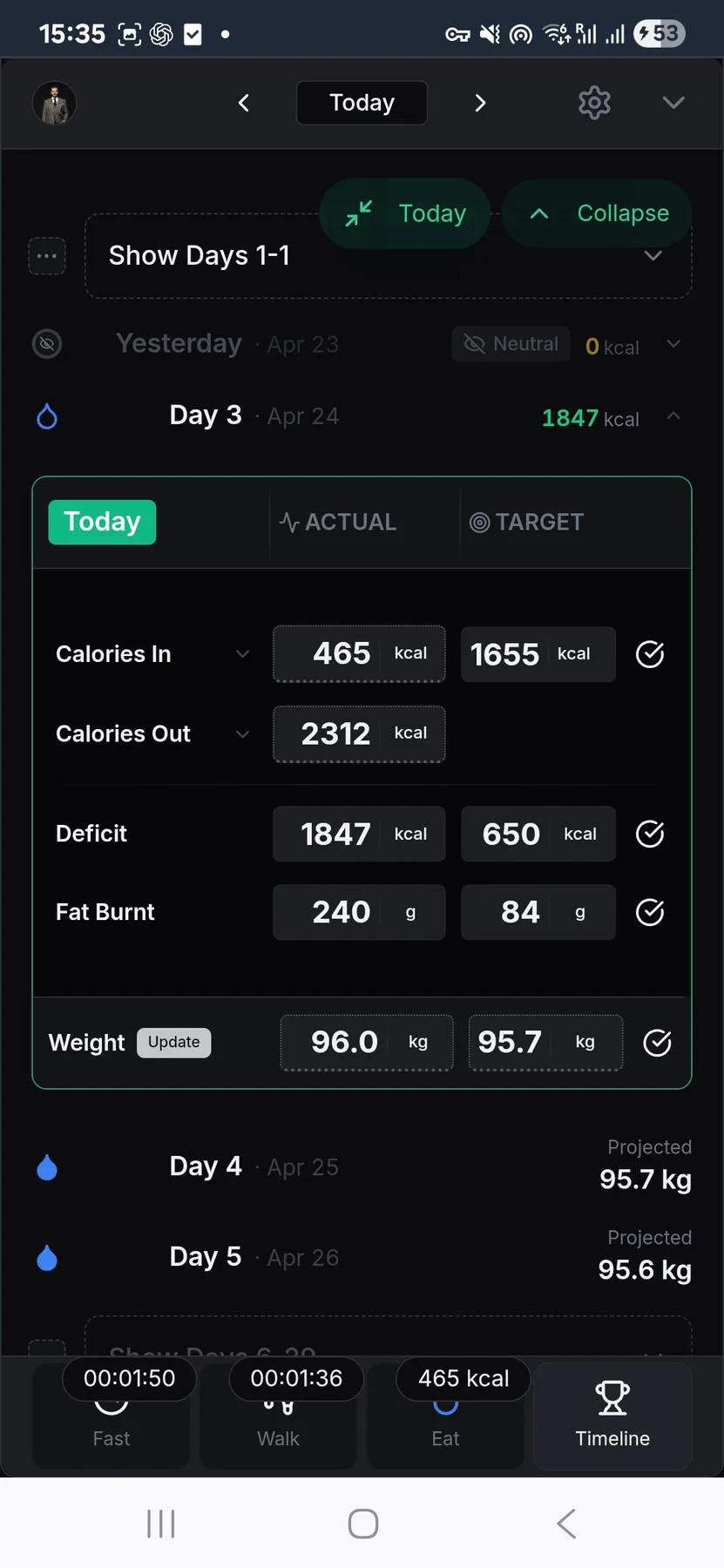
That is why FastNow treats calorie deficit as the center of the process rather than a side concept. The app uses a daily calorie target and food logging to make intake visible. This matters because many people are not failing from lack of effort. They are failing because they do not have clear contact with what they are eating. Portions The gradual, invisible loosening of structure that erodes progress — more dangerous than any single bad day.Full definition →, weekend meals go uncounted, snacks disappear into memory, and the person still believes they are in a deficit because the day felt controlled.
The goal is not to turn eating into accounting. The goal is to remove guesswork. A modest deficit such as 300 to 500 calories per day is often enough to produce real progress while still being sustainable. That is part of the FastNow approach. The deficit should be meaningful enough to work and reasonable enough to repeat across weeks, not just during a short burst of motivation.
The calorie tracker supports this by letting you log meals, save reusable entries, and compare actual intake against the daily target. That is where the process becomes more honest. Once intake is visible, patterns show up quickly. Some people discover that one restaurant meal is doing more damage than they thought. Others realize the problem is not one big meal but multiple small extras that never felt important in the moment.
A calorie deficit also works best when the rest of the structure supports it. Protein is one of the three macronutrients and plays a central role in appetite control and body composition.Full definition → helps keep meals more filling. Controlled carbs can make appetite steadier for some people. Intermittent fasting can reduce eating opportunities. Walking can deepen the daily deficit without much added friction. All of these tools matter, but they still point back to the same central reality. The deficit is what makes the body-weight change possible.
If you are using FastNow, the next step is straightforward. Open the calorie tracker, set a realistic daily target, and start logging in a way you can keep. The point is not perfection. The point is enough honesty to know whether the deficit actually exists.
The calorie deficit is where most people lose the thread — not because the math is hard, but because the old pattern has a dozen invisible ways to undo it. Mindless snacking, weekend drift, portions that creep upward, meals that "don't really count." These aren't failures of discipline. They're just what happens when the environment is still wired for the old routine. Structure helps more than effort here. When intake is visible and the target is clear, the daily negotiation shrinks. You stop relying on willpower to guess your way through each meal and start relying on a system that makes the right choice the easier one.
How Calorie Deficit Fits into the FastNow Method
Calorie deficit is the working middle of the FastNow method. This is where the plan becomes visible: intake, daily target, walking, and weekly weight trend. The tracker helps you see the estimate and adjust when reality disagrees.
Calorie Deficit App Features


Calorie Deficit in the FastNow Protocol

Calorie Deficit Calculators


Calorie Deficit Glossary Terms
Boring meal strategy
Repeating the same meals removes the need to constantly decide what to eat. This reduces mental effort and limits opportunities for impulsiv…
Decision Fatigue
Every food decision — what to eat, how much, whether to have a snack, whether to log it — costs mental energy. By the end of the day, the ca…
Drift
Drift is more dangerous than a single bad day because it is invisible. There is no dramatic failure to react to — just a slow slide back tow…
Environment design
Your surroundings shape your behavior more than motivation does. Keeping certain foods out of sight or out of the house reduces the chance o…
Fat Oxidation
Fat oxidation increases when insulin levels are lower and glycogen stores are reduced. This happens during fasting or when food intake is co…
Food environment
What you see and have access to strongly affects what you eat. Visible and easy-to-reach foods are more likely to be consumed without much t…
Friction removal
Reducing friction makes it easier to follow your plan without relying on motivation. This can include simplifying meals, preparing food in a…
Macronutrients
Each macronutrient plays a different role in how your body responds to food. Protein supports fullness and helps maintain muscle. Carbohydra…
Maintenance
Maintenance is the point where your body weight stays relatively stable over time. Intake matches what your body uses for daily activity and…
Marginal deficit
A marginal deficit creates slower but more controlled weight loss. It is easier to sustain because it does not require large restrictions. P…
Metabolic adaptation
Over time, the body can adjust to lower calorie intake by using less energy. This slows down weight loss even if you continue the same plan.…
Protein
Protein helps you feel full and reduces overall food intake. It also supports muscle maintenance during weight loss. Including enough protei…
Safe foods
Safe foods are the meals you can rely on without losing control. They are usually simple, familiar, and easy to portion without guesswork. B…
Structure Over Willpower
Willpower is real but limited — it depletes throughout the day and fails under stress, fatigue, or emotional load. Structure (fixed meal tim…
Total Daily Energy Expenditure
TDEE includes basic body functions, daily movement, and exercise. It changes over time as your weight and activity level change. Knowing you…
Trigger foods
Trigger foods are the ones that make it hard to stop once you start eating. They are often highly rewarding and easy to consume quickly, whi…
Clear definitions for key terms connected to this topic.
Topics Related to Calorie Deficit

Weight Loss
Weight loss is simple to describe and harder to do. This page covers what actually drives it, why progress is uneven, and how calorie deficit, fasting, and walking fit together.

Walking for Weight Loss
Why walking is one of the most underrated tools for weight loss, how it supports a calorie deficit, and how to use it as a daily habit instead of a fitness project.
FAQ
What calorie deficit should I aim for?
A 300-500 calorie daily deficit is sustainable for most people and produces 0.5-1 pound of fat loss per week. Larger deficits are possible but harder to maintain without muscle loss and hunger issues.
What matters more in real life, satiety or calories?
Calories determine the deficit, but satiety often determines whether you can keep it. A plan with perfect math and miserable hunger usually collapses. The useful approach is to build meals that stay within the calorie target and still make you feel like you actually ate.
How do I eat out without blowing the deficit?
Decide before you arrive what kind of meal you are aiming for instead of improvising when hungry. Center the meal on a protein source, keep calorie-dense extras more deliberate, and avoid turning one restaurant meal into an all-day excuse. Eating out does not have to be perfect. It just needs to stop becoming a free-for-all.
How long before I see results?
Most people notice reduced hunger within 1-2 weeks as their body adjusts. Visible fat loss typically becomes clear after 4-6 weeks of consistent adherence.
What if weekends break my deficit?
Track weekends explicitly and plan guardrails in advance. Most weekly deficits are undone between Friday evening and Sunday - not during the week.
Why does logging change behavior even before the calories matter?
Because it creates friction between the impulse and the action. Once you know you are going to record the meal, the choice becomes more concrete. That often reduces casual overeating, repeated snacking, and the mental trick where a small extra somehow does not count.