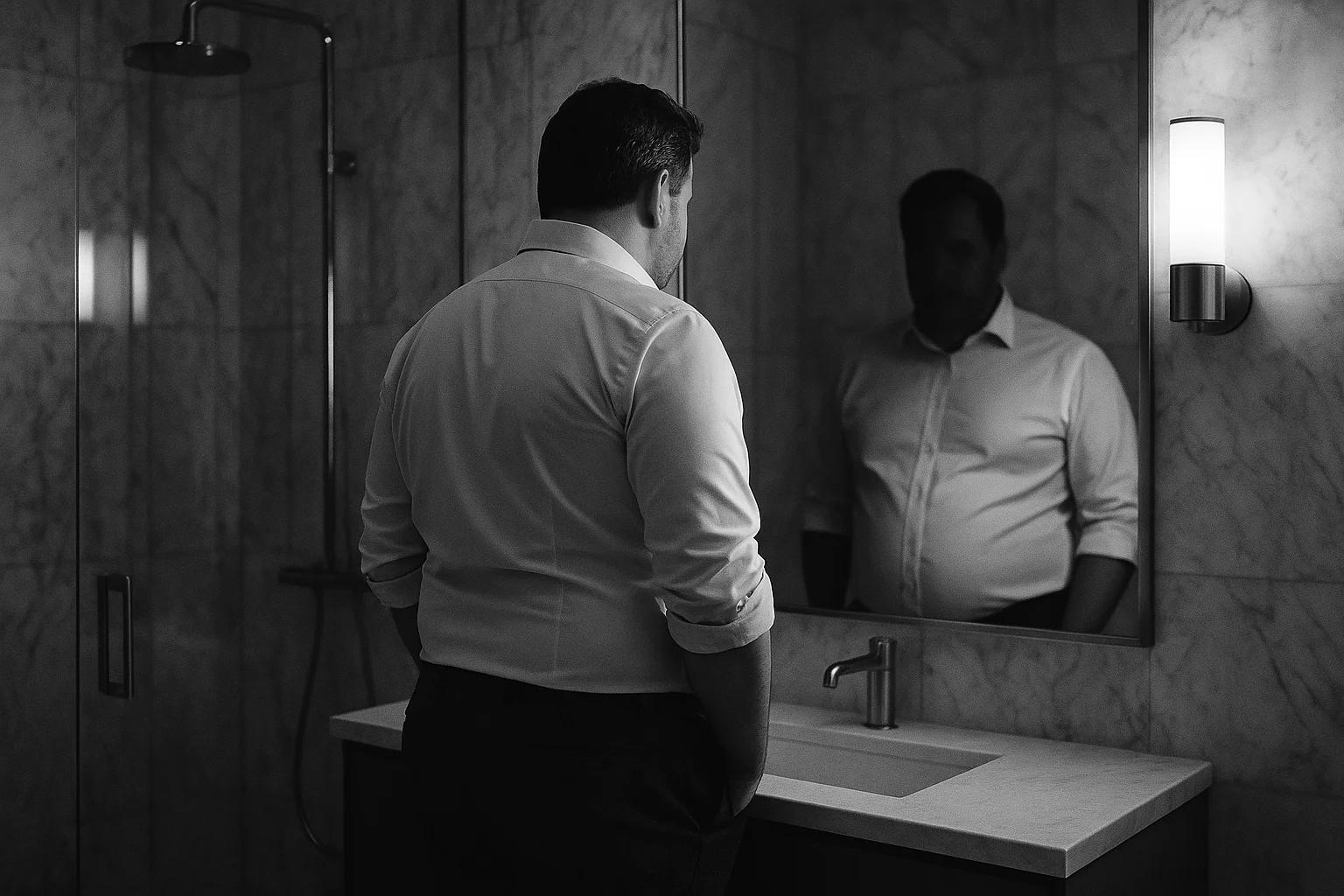
Pourquoi ton poids remonte après un jeûne
Tu termines un jeûne de 60 heures. Tu atteins un nouveau point bas sur la balance. Tu manges un repas léger. Le lendemain matin, tu pèses 2 kg (4,4 lbs) de plus. Cet article explique exactement pourquoi ça arrive, ce que représente vraiment cette prise de poids après un jeûne, et quand tu peux à nouveau faire confiance à la balance.
La mécanique du rebond
À la fin d'un jeûne de 60 heures, ton corps est dans un état inhabituel. Ton tube digestif est complètement vide. Rien n'y est entré depuis deux jours et demi. Les réserves de Réserve de glucides liée à l'eau sur la balance.Définition complète → sont épuisées. Le poids lié à l'eau est en baisse car le glycogène retient de l'eau. La digestion est totalement inactive. Tu es aussi léger et vide que possible.
Puis tu manges. Même une petite réalimentation change tout. 500 g de kéfir, 600 à 700 g de Pepsi Zero, une poignée de myrtilles, et une hydratation normale. Ça ajoute déjà plus d'un kilo de masse physique à ton corps. Et ce n'est que le poids de la nourriture elle-même en toi.
Ce n'est pas de la graisse. C'est du volume. La nourriture a un poids. Le liquide a un poids. Ils restent dans ton estomac et tes intestins pendant que ton corps les traite. Si tu buvais un litre d'eau, tu pèserais immédiatement 1 kg de plus. Ça ne signifie pas que tu as pris 1 kg de graisse. Le même principe s'applique à tes premiers repas après le jeûne.
Le glycogène se reconstitue, l'eau suit
Quand tu manges des glucides après un jeûne, même en quantité modeste, ton corps commence à reconstituer ses réserves de glycogène. Le glycogène fixe l'eau dans un rapport d'environ 3 pour 1. Donc chaque gramme de glycogène stocké attire 3 grammes d'eau avec lui.
Si tu as mangé 100 g de glucides le premier jour et 60 à 70 g les jours suivants, c'est suffisant pour partiellement reconstituer les réserves. L'eau qui va avec apparaît sur la balance comme du poids.
J'ai pris environ 3 kg dans les deux premiers jours après mon jeûne. Je m'attendais à un rebond. Pas à autant. Mais dans les jours qui ont suivi, le poids est progressivement redescendu vers le point bas d'après-jeûne.
L'insuline et les déplacements d'eau
Après 60 heures sans nourriture, ta À quel point l'insuline « fait effet » sur les cellules.Définition complète → est accrue. C'est une bonne chose pour la combustion des graisses. Mais ça signifie aussi que quand tu manges, l'insuline répond fortement.
Cette réponse provoque :
- L'eau à retourner dans les tissus
- Le volume sanguin à se normaliser
- Le glycogène à se reconstituer plus vite
Ces changements sont rapides. Ils apparaissent sur la balance en quelques heures. Ils se produisent bien avant que toute variation liée à la graisse soit visible. C'est ton corps qui se recalibre pour avoir à nouveau de la nourriture, ce n'est pas l'annulation du travail du jeûne.
La digestion redémarre vite
Après deux jours de rien, tes intestins sont en veille. Dès que tu manges, même un peu, les choses bougent.
Le péristaltisme redémarre. Les signaux hormonaux déclenchent le mouvement. Le côlon commence à traiter ce qui est là. Tu pourrais avoir un transit intestinal étonnamment vite après ton premier repas. Le déclencheur compte plus que la quantité.
Cette réactivation ajoute du poids via le contenu intestinal et les fluides retenus dans le système digestif. Complètement normal. Complètement temporaire.
Ton matin révèle la vraie histoire
Même quand la balance monte, ton corps brûle encore de la graisse. Tu le constates à ce qui se passe chaque matin pendant la première semaine après un jeûne.
Je me réveillais chaque matin avec les mêmes signaux : bouche sèche, goût métallique, ventre plat, léger bourdonnement dans la tête. Ce sont les indicateurs de la Carburant graisse quand les glucides sont bas.Définition complète →. Ils signifient que ton corps a passé la nuit à brûler des graisses pour se fournir en énergie. Même si tu as mangé des glucides pendant la journée (60 à 100 g), ton corps entre en cétose profonde la nuit parce que les réserves de glycogène sont encore partiellement épuisées par le jeûne de 60 heures.
C'est l'avantage créé par le jeûne. Ton métabolisme a été réinitialisé. Il brûle les graisses plus efficacement la nuit, même avec un apport modéré en glucides pendant la journée. La balance peut afficher un chiffre plus élevé, mais ton corps fait exactement ce que tu veux pendant que tu dors.
Ce que la balance montre, jour après jour
Voici ce que j'ai observé après mon jeûne de 60 heures :
- Fin du jeûne : nouveau point bas historique
- Jour 1 après reprise alimentaire : +1 kg environ
- Jour 2 : encore plus haut. Le poids est revenu à peu près aux niveaux d'avant le jeûne
- Jours 3-4 : le poids s'est maintenu, puis a commencé à baisser
- Jour 5 : retour près du point bas d'après-jeûne. Le déficit moyen était d'environ 700 calories par jour.
- Jour 6 : passage sous le point bas d'après-jeûne pour la première fois. La vraie tendance de perte de graisse était visible.
- Jour 7 : légère remontée d'environ 600 g. Fluctuation normale.
Le schéma est prévisible. Forte hausse, stabilisation, baisse progressive, puis nouveau territoire. À chaque fois.
Pourquoi ce n'est PAS de la graisse
La graisse ne revient pas aussi vite. Pour prendre 3 kg de graisse réelle, il faudrait manger environ 23 000 calories au-dessus de ton niveau de maintenance. Ce n'est pas ce qui s'est passé quand tu as mangé 500 calories de concombres et de kéfir.
Ce qui est revenu, c'était :
- La masse physique des aliments dans tes intestins
- L'eau liée au glycogène
- Les fluides redistribués par l'insuline
- Le volume sanguin normal
Tout ça est temporaire. Tout ça s'inverse en quelques jours si tu maintiens ton déficit.
La graisse que tu as perdue pendant le jeûne est partie. Ton déficit calorique pendant et après le jeûne est toujours réel. Les maths n'ont pas changé juste parce que la balance a monté. La balance montre de l'eau et du contenu intestinal, pas des progrès annulés.
La fenêtre de dynamique est toujours active
C'est ce que les gens manquent. Ils voient la balance monter et pensent que le jeûne était inutile. C'est l'inverse.
Les 48 à 72 heures après un jeûne sont ta période de combustion des graisses la plus élevée. Ton glycogène est bas. L'insuline est minimale. L'Le corps utilise les graisses pour l'énergie.Définition complète → est élevée. La faim est réduite.
Une marche de 90 minutes pendant cette fenêtre brûle principalement du gras. Ton corps n'a pas de glycogène sur lequel s'appuyer, donc chaque pas puise dans les réserves de graisse. Si tu maintiens un déficit calorique pendant ces jours, tu amplifies l'avantage métabolique créé par le jeûne.
Cette fenêtre de dynamique dure deux à quatre jours avant que le corps ne se normalise complètement. La balance ne le montre peut-être pas à cause du poids de l'eau et des aliments qui revient. Mais en dessous de ce bruit, la graisse part. La tendance devient visible vers le jour 5 ou 6 quand le poids temporaire se stabilise.
Quand faire de nouveau confiance à la balance
Ne juge pas tes progrès sur ce que la balance dit les jours 1 à 4. Ces chiffres reflètent l'eau, le contenu intestinal et le glycogène. Pas la graisse.
Au jour 5 ou 6, les choses se stabilisent. Le rebond est terminé. Le glycogène s'est stabilisé. La rétention d'eau s'est évacuée. Ce que tu vois sur la balance est plus proche de ton poids réel.
La meilleure approche est de faire confiance à la tendance. Pèse-toi chaque jour, note le chiffre, et regarde la direction sur 7 à 14 jours. Un chiffre un jour donné ne dit presque rien. La pente de la courbe sur deux semaines dit tout.
Comment gérer le rebond
- Attends-toi y. Savoir que ça va arriver rend la chose plus facile à gérer.
- Ne réagis pas. Ne réduis pas les calories ou ne saute pas de repas parce que la balance a monté. Tiens-toi à ton plan.
- Reste pauvre en glucides. Moins de 40 g de glucides par jour minimise la Après manger : glycogène plein, eau de retour.Définition complète → et réduit l'ampleur du rebond.
- Continue à marcher. 90 minutes par jour. Ça maintient ton déficit et garde l'oxydation des graisses élevée pendant la fenêtre de dynamique.
- Regarde le jour 6, pas le jour 1. C'est là qu'apparaît le vrai chiffre.


