Pérdida de peso
Perder peso suena simple: comer un poco menos, moverse un poco más, ser constante. En la vida real la báscula oscila, el apetito reacciona al estrés y la motivación suele agotarse antes que el plan. FastNow trata la pérdida de peso como un **proceso estructurado**, no como un deseo vago.

En la app encajan el ayuno, el Gastas más energía de la que consumes; así el cuerpo usa reservas.Definición completa → y caminar: el ayuno reduce ocasiones de comer y reordena el hambre; las calorías crean el déficit necesario para bajar grasa; caminar sube el gasto diario de forma sostenible semanas y meses. Juntos se refuerzan; aislados, menos.
A corto plazo peso y grasa no son lo mismo: agua, digestión y Reserva de carbohidrato en músculo e hígado; arrastra agua.Definición completa → mueven la báscula. Por eso hay vistas de tendencia y de 7 días: menos reaccionar a un solo día, más leer el patrón.
Los retos de 30–180 días convierten una meta lejana en señales diarias visibles (calorías, pasos, tiempo restante). La idea es calmada: lo bastante simple para repetir, medible para ser honesto, flexible para el día a día.
Siguiente paso: elige una ventana de reto, fija el objetivo y usa las herramientas que hacen visible el proceso.
The reason most weight loss attempts fail has nothing to do with knowing what to eat. The old pattern — the familiar loop of starting strong, drifting after a week, and eventually restarting — is simply more practiced than any new routine you try to build. That's not a character flaw; it's how repetition works. The pattern you've done a hundred times runs on autopilot. The one you started three days ago still requires effort for every decision. FastNow is built around this idea: make the new pattern simple enough to repeat, visible enough to track, and structured enough that it doesn't depend on motivation to keep going. Over time, the new pattern catches up — not because you white-knuckled it, but because you made it easier to continue than to quit.
Funciones de FastNow


Seguimiento de Peso
Registra tu peso a diario y observa la tendencia, no las cifras individuales, para comprender tu verdadero progreso.


Registro de caminatas
Registra tus pasos diarios, estima las calorías que quemas y crea el hábito que mantiene tu déficit de manera sostenible.


Contador de Calorías
Registra tus comidas una vez, reutilízalas a diario y mantén tu consumo de calorías alineado con tu objetivo, todo en un solo lugar.

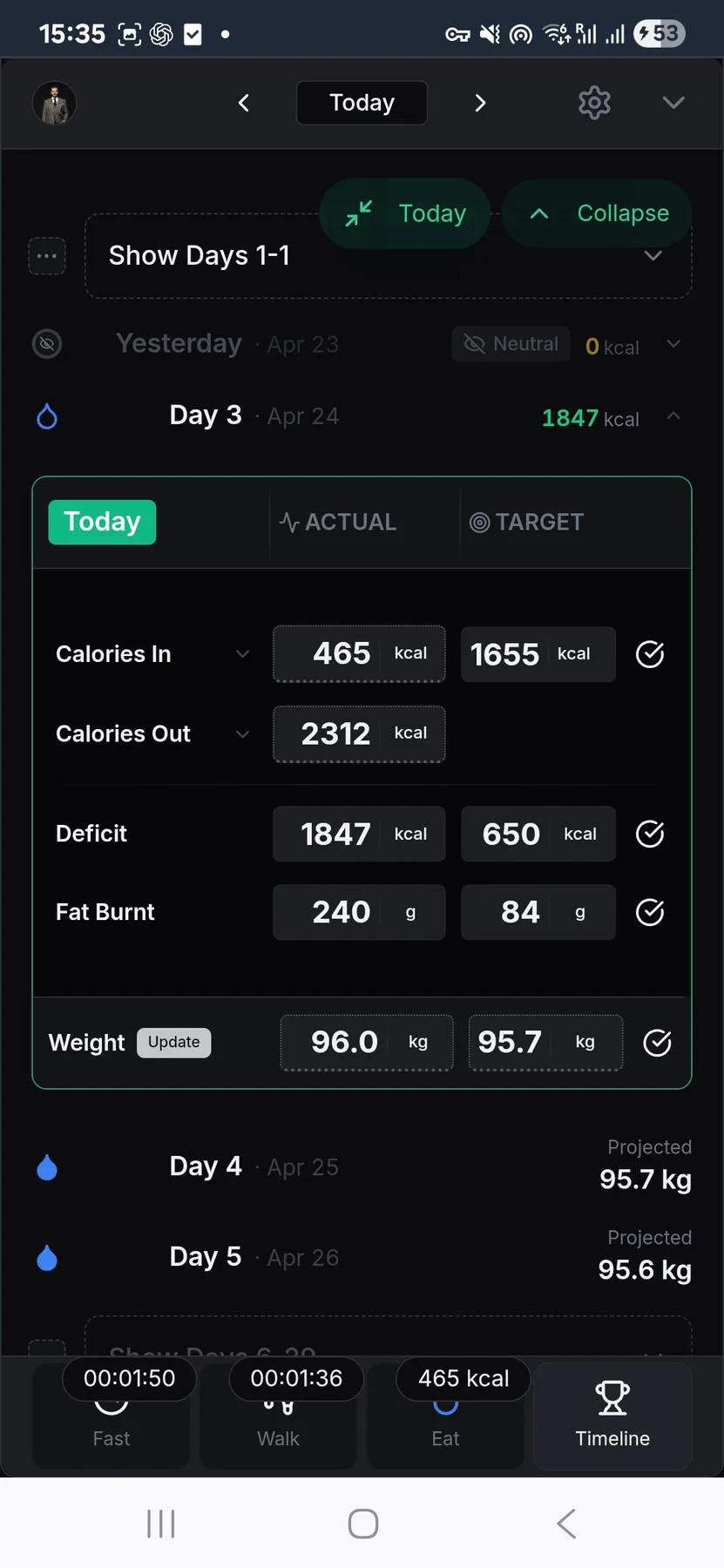
Panel de Progreso
Visualiza tu tendencia, adherencia, progreso de fases y tiempo restante, todo en una sola vista.
Protocolo

Entradas del blog

Cómo Controlarte — Hablemos en Serio Sobre Perder el Control con la Comida
Hace años vi un video de 50 Cent dando un recorrido por su casa. Abrió su nevera y solo había botellas de agua. Nada más. Dijo que eso...

Los 15 pasos de la escala de los pantalones
Sigue el cambio del cuerpo con un pantalón que conoces, desde que no sube por los muslos hasta que se baja sin cinturón.
Calculadoras
Planificador de ayuno largo
Elige una duración y mira los hitos y la hora de fin.

Calculadora de Pérdida de Peso
Estima el déficit, la velocidad de pérdida de grasa y los resultados diarios prácticos.

Simulador de Peso
Cronograma y progreso hacia tu peso ideal.

Calculadora de Calorías de Alimentos
Crea combinaciones de alimentos para alcanzar tu objetivo calórico y estilo de macronutrientes.

Calculadora de IMC
Calcula tu categoría de IMC y comprende sus límites de interpretación.
Glosario
Déficit calórico
El déficit obliga al cuerpo a usar reservas para cubrir la diferencia entre ingesta y demanda. La velocidad depende de la constancia día a d…
Deriva
La deriva es más peligrosa que un solo mal día porque es invisible. No hay un fracaso dramático al que reaccionar, solo un deslizamiento len…
efecto de masa alimentaria
La báscula mide todo lo que hay dentro, no solo grasa. Tras una comida grande sube el peso por volumen y agua. Es temporal y baja al digerir…
efecto whoosh
Revela grasa ya perdida que el agua ocultaba. Patrón habitual en pérdidas largas.
Fase de adaptación
En esta fase el progreso parece frenarse mientras el cuerpo estabiliza hormonas y gasto energético en el nuevo peso. Puede sentirse como un…
fase de mantenimiento temporal
Puede mantenerse el peso aunque el plan sea coherente; es frecuente en pérdidas largas. Por dentro pueden seguir cambios aunque la báscula n…
Habilidad de Recuperación
La mayoría de las personas se enfocan en evitar errores. Pero los errores son inevitables: un ayuno interrumpido, un día sin seguimiento, un…
La estructura vence a la voluntad
La fuerza de voluntad es real, pero limitada: se agota a lo largo del día y falla bajo estrés, fatiga o carga emocional. La estructura (hora…
meseta
Es habitual. No implica que la grasa no se mueva. La constancia suele romper la meseta con el tiempo.
oscilaciones de agua
Sal, carbos, estrés y actividad mueven litros aparentes en la báscula sin tocar grasa.
Patrón Antiguo
Los viejos patrones no son defectos de carácter. Son simplemente comportamientos más practicados que cualquier nuevo hábito que estés intent…
peso de agua
Cambia rápido; la báscula de un día miente a menudo. Tendencias largas separan agua de progreso real.
peso de rebote
Vuelven comida, agua y glucógeno; no es grasa nueva. Suele estabilizarse en pocos días. Saberlo evita romper el plan por un pico en la báscu…
peso defendido
El organismo estabiliza ciertos pesos y salir del rango pide paciencia y constancia. El progreso puede parecer lento o pausado; con el tiemp…
Prueba de Comportamiento
La prueba de comportamiento es lo opuesto a la motivación. En lugar de intentar creer que puedes cambiar antes de actuar, primero actúas y d…
recuperación de peso
Parte es rápida y no implica grasa recuperada. Estructura a largo plazo evita deriva sostenida.
Reinicio de Lunes
El bucle de reinicio del lunes es uno de los patrones más comunes en la pérdida de peso. Parece productivo porque cada reinicio viene con un…
retención de líquidos
Enmascara pérdida de grasa en la báscula. Suele regularse cuando baja el estrés y se estabiliza la rutina.
retraso en la medición
El agua y la digestión enmascaran la grasa que ya bajó. Pueden pasar días o semanas hasta que se note. La constancia en el déficit sigue imp…
Romper patrones
En FastNow, la interrupción principal del patrón es el ayuno extendido de 60 horas en la Fase 1. Al eliminar todas las decisiones alimentari…
suelo de peso
Pausa mientras el cuerpo se ajusta. La constancia suele traer el siguiente descenso.
volatilidad de la báscula
Lo diario rara vez refleja solo grasa. Mirar semanas filtra el ruido.
Definiciones claras de términos clave relacionados con este tema.
Temas Relacionados

Déficit calórico
Por qué el déficit calórico es central en FastNow y cómo el registro lo hace visible.

Ayuno
Ayuno intermitente y prolongado en FastNow: estructura, déficit calórico, proteína y caminata diaria.

Caminar
Por qué caminar a diario apoya el déficit calórico y cómo FastNow lo integra en la fase 3.
Weight-Loss Plateau and Scale Fluctuations
Preguntas frecuentes
¿Por qué sube el peso tras un buen día?
Retención de líquidos, glucógeno, sal y digestión pueden subir la báscula aunque sigas perdiendo grasa. Es normal y suele estabilizarse en 24–48 horas.
¿Con qué frecuencia pesarme?
Pesar a diario da el mejor dato de tendencia si lo lees por semanas. Pesar poco hace que las fluctuaciones normales parezcan saltos enormes.
¿Qué ritmo de pérdida de grasa es razonable?
Unos 0,25–0,7 kg por semana es sostenible para muchas personas. Más rápido suele incluir agua, glucógeno y músculo, no solo grasa.
¿Cuándo reaccionar al peso?
Por bloques de 7 días. Si la tendencia se mantiene plana o sube dos semanas enteras pese al esfuerzo real, investiga. Uno o dos días malos, no.
¿Cuánto tarda en notarse?
Muchas personas sienten menos hambre en 1–2 semanas al adaptarse. La pérdida de grasa visible suele verse tras 4–6 semanas de constancia.
¿Qué causa los saltos más bruscos a corto plazo?
Sobre todo agua: comidas muy saladas, recargas de carbohidratos, alcohol, mal dormir, estreñimiento, viajes, entrenos duros. Una pesada alta sola dice poco.