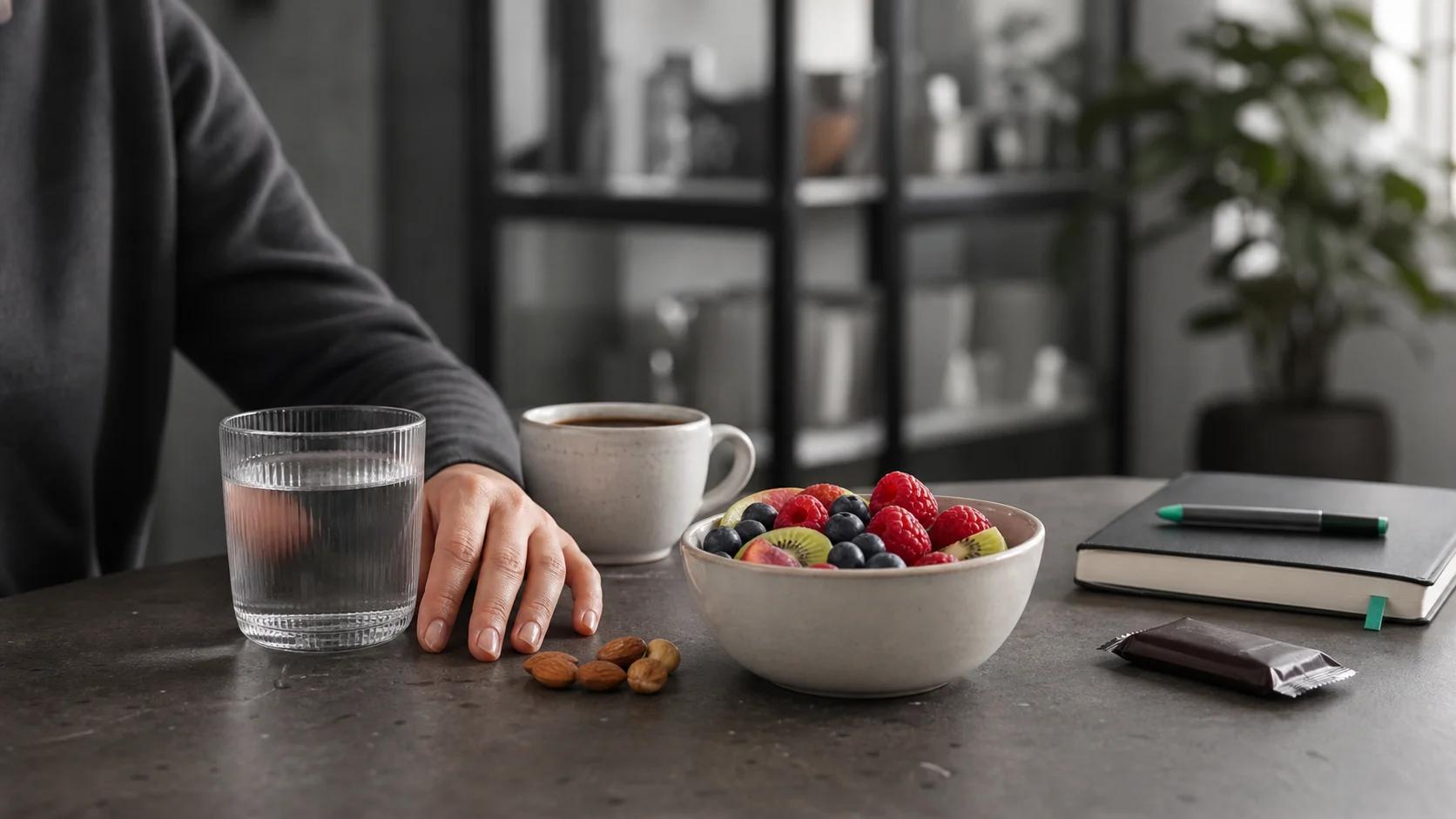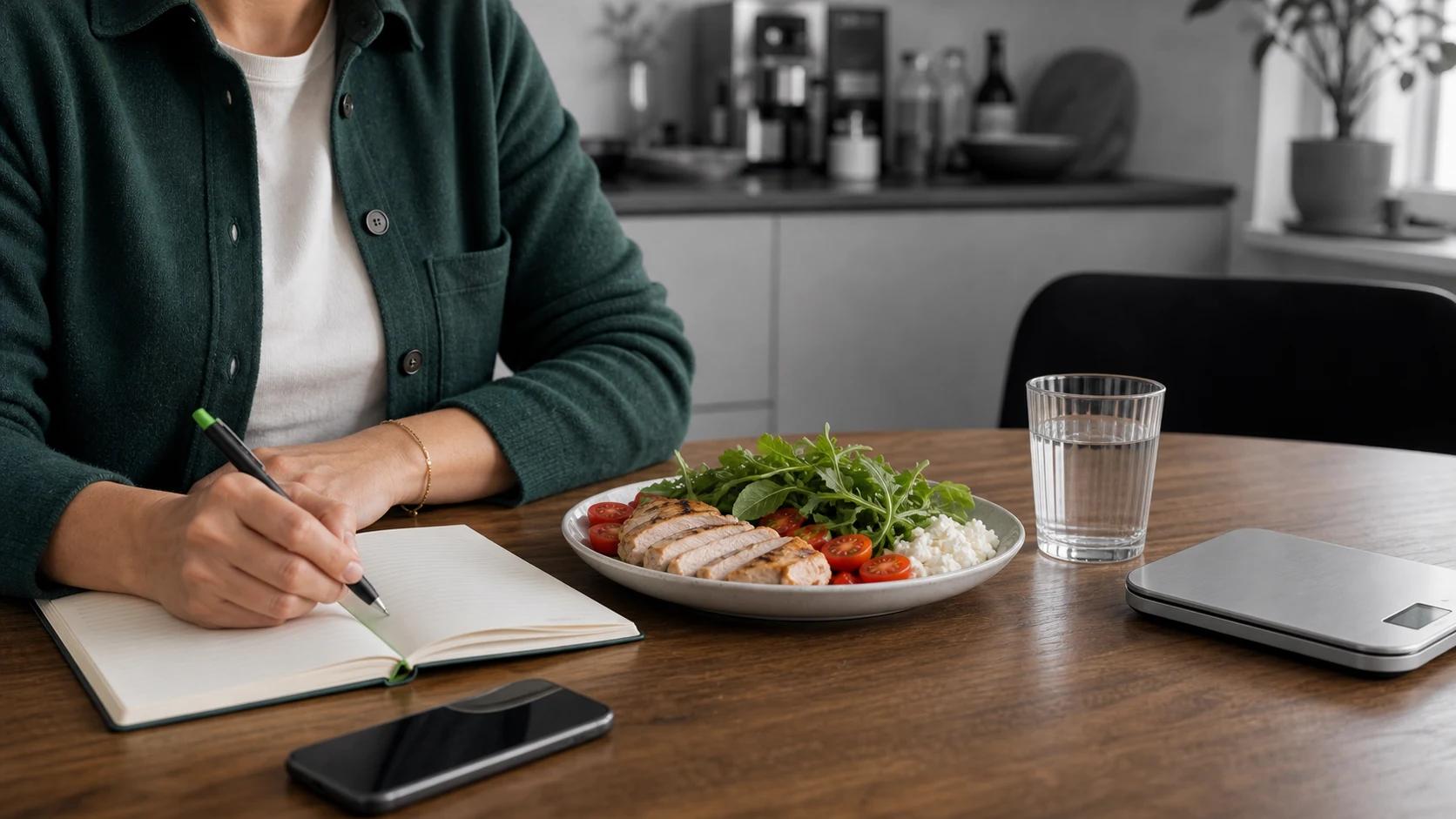
Pendant que j'écris ça, je mange mon deuxième yaourt. Il est dense en calories, et je sais que je n'en avais pas vraiment besoin si tôt dans la journée. Du coup, il reste moins de marge ce soir.
Avant, j'aurais repoussé l'entrée. Pas parce que je ne connaissais pas le chiffre, mais parce qu'à treize heures je ne voulais pas encore voir combien de budget restait.
Un chiffre désagréable reste utile
Noter ne se sent pas toujours gratifiant. Tu fais l'effort, tu rentres tout, et parfois tu reçois de la culpabilité en retour. Du coup, les gens sautent justement les jours où l'information compterait le plus.
Une entrée n'est pas un jugement. Elle dit à peu près combien tu as mangé et quelle marge reste. Avec cette information, tu peux planifier ta soirée au lieu de continuer au feeling.
Noter hors d'une phase active de perte
Même si tu ne suis pas de challenge, le suivi peut te garder proche du sujet. Tu n'as peut-être pas de prise aujourd'hui sur un déficit, mais tu peux voir quand le maintien glisse lentement vers un surplus.
Tu remarques que tu es près de ta limite et tu décides de laisser un snack en plus ou de faire une marche parce que tu voulais bouger de toute façon. Pas pour punir la nourriture, mais pour garder toute la journée visible.
Ce qui se passe quand tu arrêtes de regarder
Après une longue période de perte, j'ai volontairement laissé revenir quelques produits: d'abord le chocolat, puis le pain, les pâtes et les pommes de terre. En même temps, j'ai arrêté de noter. Une entrée honnête aurait montré que le déficit avait disparu, alors j'ai préféré ne pas regarder.
Un jour d'exceptions est devenu une série. Des mois plus tard seulement, j'ai regardé à nouveau complètement, et une partie du poids était revenue.
C'est la La détérioration lente et invisible qui ronge tes progrès, plus dangereuse qu'une seule mauvaise journée.Définition complète →: pas un grand effondrement, mais de moins en moins de regard sur des choix un peu plus larges.
Note donc les jours où ça va et les jours où tu préfères ne pas regarder. Ouvre l'app, entre exactement ce produit-là et laisse le chiffre rester une information. Ensuite, choisis la prochaine étape normale.