Il y a deux façons honnêtes de suivre ce qui se passe dans ton corps: la balance et tes vêtements. La bonne réponse est souvent d'utiliser les deux, en commençant par celui avec lequel tu peux te lancer.
Quand la balance est trop difficile au début
Beaucoup de gens commencent au poids le plus élevé de leur vie, et monter sur une balance le premier jour ne fait que confirmer un chiffre qu'ils préféreraient ne pas avoir en tête. Si c'est ton cas, tu n'es pas obligé de commencer par là. Tu peux te fier à comment tes vêtements te vont pendant un moment, puis introduire la balance plus tard, quand assez de choses ont changé et que le chiffre sera déjà en dessous du pic. Ce n'est pas de la faiblesse. C'est une façon d'avancer sans donner à ta motivation une mauvaise matinée avant même d'avoir construit quoi que ce soit.
Pourquoi les vêtements sont honnêtes
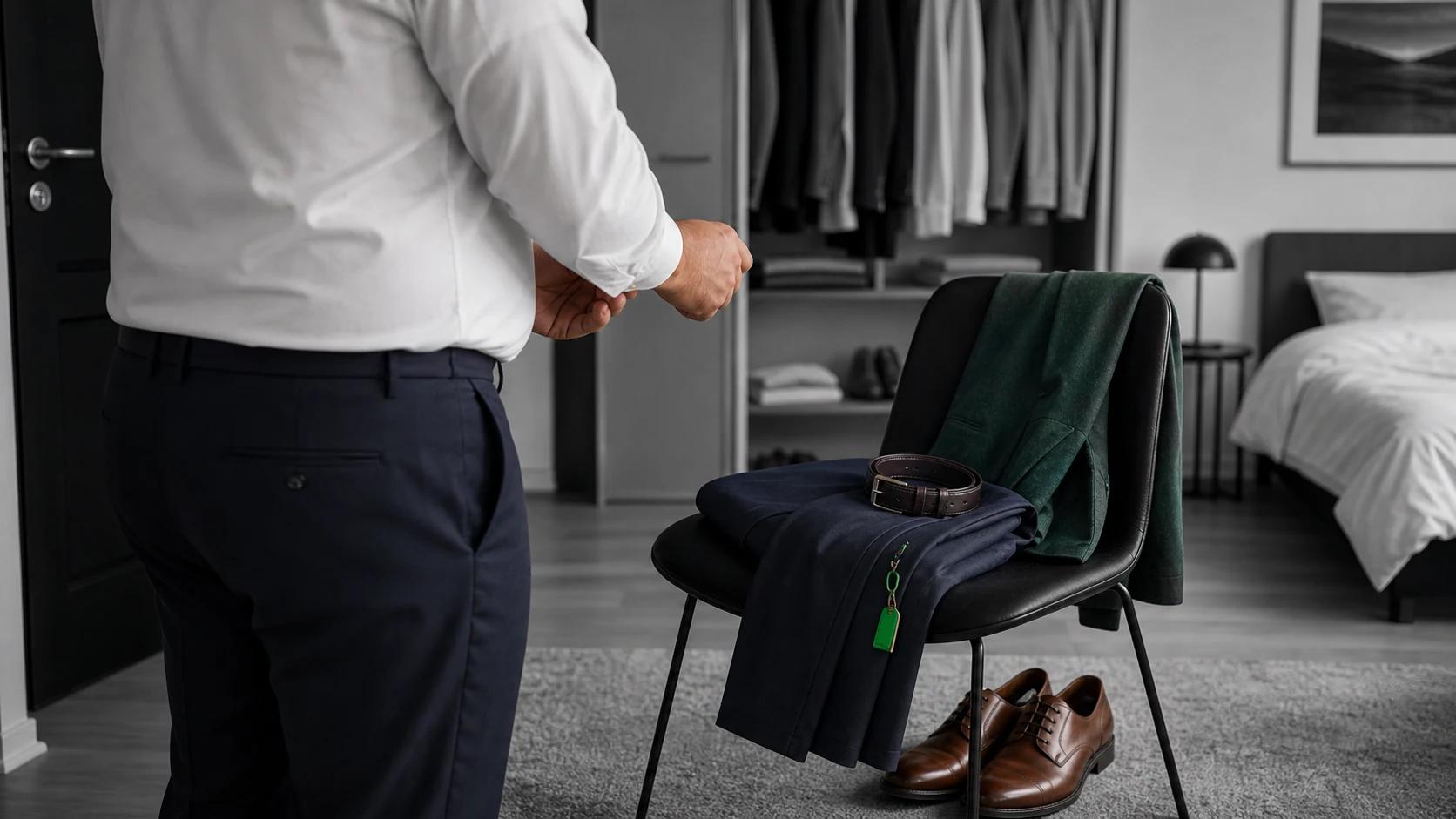
La balance mesure plus que la graisse. Elle varie avec la Le corps retient plus d'eau que d'habitude.Définition complète →, le sel, la nourriture encore en cours de digestion et l'heure de la journée, donc un seul matin ne dit pas grand-chose. Les vêtements n'ont pas ce bruit. Une ceinture est soit plus facile à fermer cette semaine que la semaine dernière, soit elle ne l'est pas. Un t-shirt arrête soit de tirer sur la poitrine, soit il ne le fait pas. Tu peux être assez précis. Un pantalon passe par des étapes: trop serré pour se fermer, se ferme mais serre quand tu t'assieds, se ferme et est confortable, assez ample pour passer une main dans la ceinture, assez ample pour enlever sans ouvrir le bouton.
Bien utiliser la balance quand tu es prêt
Quand la peur du début est passée, réintroduis la balance, mais utilise-la comme une tendance plutôt que comme un verdict. Pèse-toi le matin, dans les mêmes conditions, tous les quelques jours, et observe la courbe sur plusieurs semaines. Ignore chaque jour pris isolément. Utilisée ainsi, elle cesse d'être quelque chose que tu redoutes et devient la vue d'ensemble, pendant que tes vêtements gèrent le quotidien.