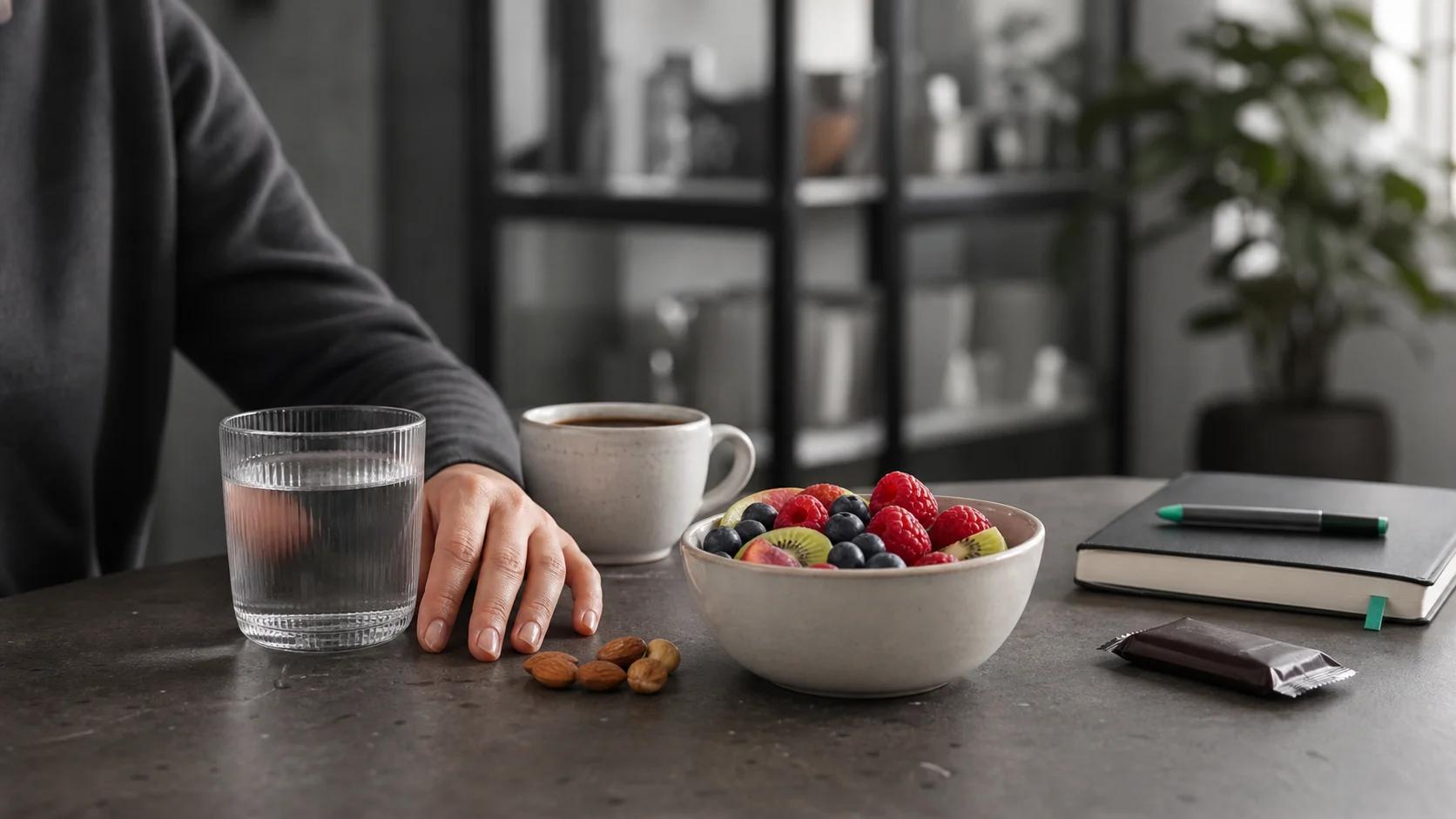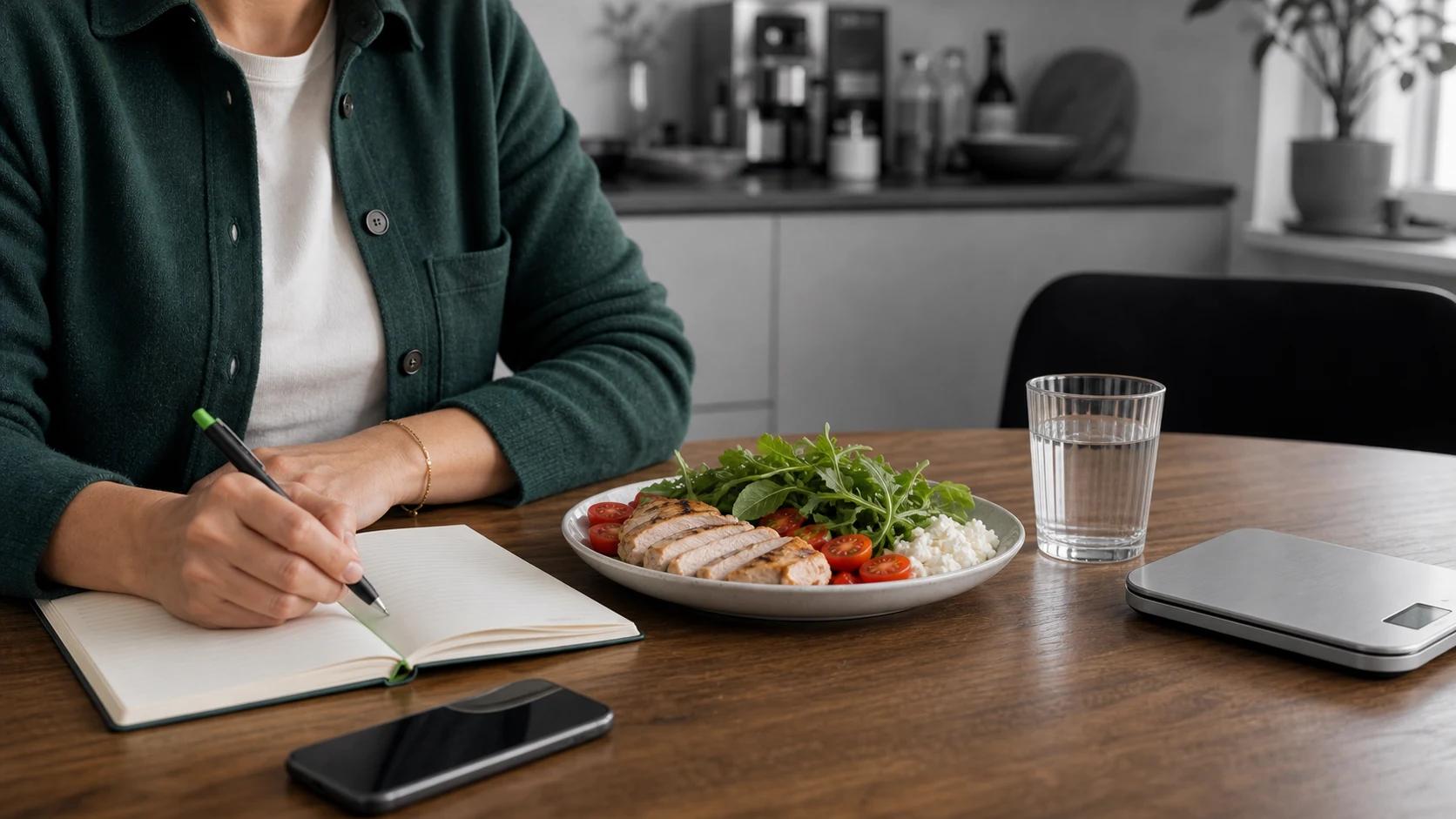
People who get stuck on calorie tracking usually have the same problem. They keep eating complicated meals, restaurant plates, mixed cooked dishes, salads with ten ingredients, and then ask the app to estimate it for them. The estimate comes back off. They go looking for a smarter tracker, a better food database, a camera that can recognize a plate.
The tracker isn't the problem. The food is.
A serious cut is a bounded sacrifice
A serious cut isn't a lifestyle. It's a defined period, 60, 90, 120 days, where you accept restriction in exchange for moving the number. The point is the deficit, held long enough to matter.
That means food becomes functional. Not boring forever. Functional for the length of the cut.
The question stops being "What do I feel like eating?" and becomes "What can I eat that I can measure without spending half my day on it?"
Build a small library
You don't need variety to lose weight. You need repeatability.
Pick 15 to 20 foods you genuinely like and can measure easily:
- Simple proteins.
- Simple vegetables.
- Foods that come with a label.
- Things you can weigh once and remember.
Add each one to the app once. After that, you reuse it. You adjust quantities. You swap a cheese, swap a meat, add one new item when you need it. The library does the heavy lifting; the tracker just records.
This is why the app is enough for most cuts. The complexity isn't in the software. It's in deciding to simplify the food.
The short list that works
Here is the actual starter set most people can run a cut on. Buy them, weigh each once, then reuse:
- Protein is one of the three macronutrients and plays a central role in appetite control and body composition.Full definition →: chicken breast, eggs, salmon, beef sirloin, ground beef (90/10), ham.
- Dairy: Greek yogurt (0%), feta, brie, kefir.
- Vegetables: cucumber, dill pickles.
That is twelve foods. You do not need more than this to lose weight. See the full list with photos and per-100g macros.
Useful accuracy, not microscopic accuracy
There's a level of accuracy that helps and a level that wastes your day.
If your deficit is large enough to matter, you don't need to know whether the apple was 84 or 91 calories. You need to know roughly what you ate, and you need to stay inside a range.
If you genuinely need exact-calorie precision to keep losing weight, the deficit is probably too small for the goal you set. Fix the deficit before you fix the decimal places.
Cutting and maintenance are different jobs
This whole philosophy is for the cut. Calorie intake equal to energy expenditure, resulting in stable weight.Full definition → is different.
In maintenance, food gets more varied on purpose. You go to dinners. You eat things you avoided. You learn how the new weight holds against fluctuations and water and a normal social life. Tracking becomes approximate by design. Photo logging and voice notes start to earn their keep, because the food is now harder to measure.
Different phase, different strategy. Don't drag cutting rules into maintenance, and don't drag maintenance freedom into a cut.
Where the app fits
The app is built for the simple version first.
Add your foods once. Reuse them. Stay inside the calorie range you set for yourself. That's it. The app covers the entire cut from day one to day ninety. See how the calorie tracker handles your staples.
The conveniences, voice logging, photo logging, exist for the days and phases when food gets messier. They are not what makes the cut work.
What makes the cut work is the decision to simplify the food first.