FastNowFastNowDas System und die App für Gewichtsverlust
StartProtokollLebensmittelMotivatorenLeitfadenApp-ÜbersichtFördererFeedback

Loading…

Alle Rechner

  • Schrittrechner
  • BMI-Rechner
  • Gewichtsverlust-Rechner
  • Gewichts-Simulator
  • Kalorienrechner Lebensmittel

Resources

  • Lebensmittel
  • Blogbeiträge (Englisch)
  • Community
  • Motivatoren
  • Glossary

App-Übersicht

  • Ein Brief vom Gründer

App-Funktionen

  • Intervallfasten-Tracker
  • Langfasten-Tracker
  • Gewichtstracking
  • Walking-Tracker
  • Kalorientracker
  • 90-Tage-Challenge
© 2026 FastNow
DatenschutzAGBKontaktGet on Google PlayFeedbackCookie-Einstellungen
←Leitfaden

Mastering the Egg: No Rituals, Perfect Results

Feraz18. Juni 2026
Mastering the Egg: No Rituals, Perfect Results

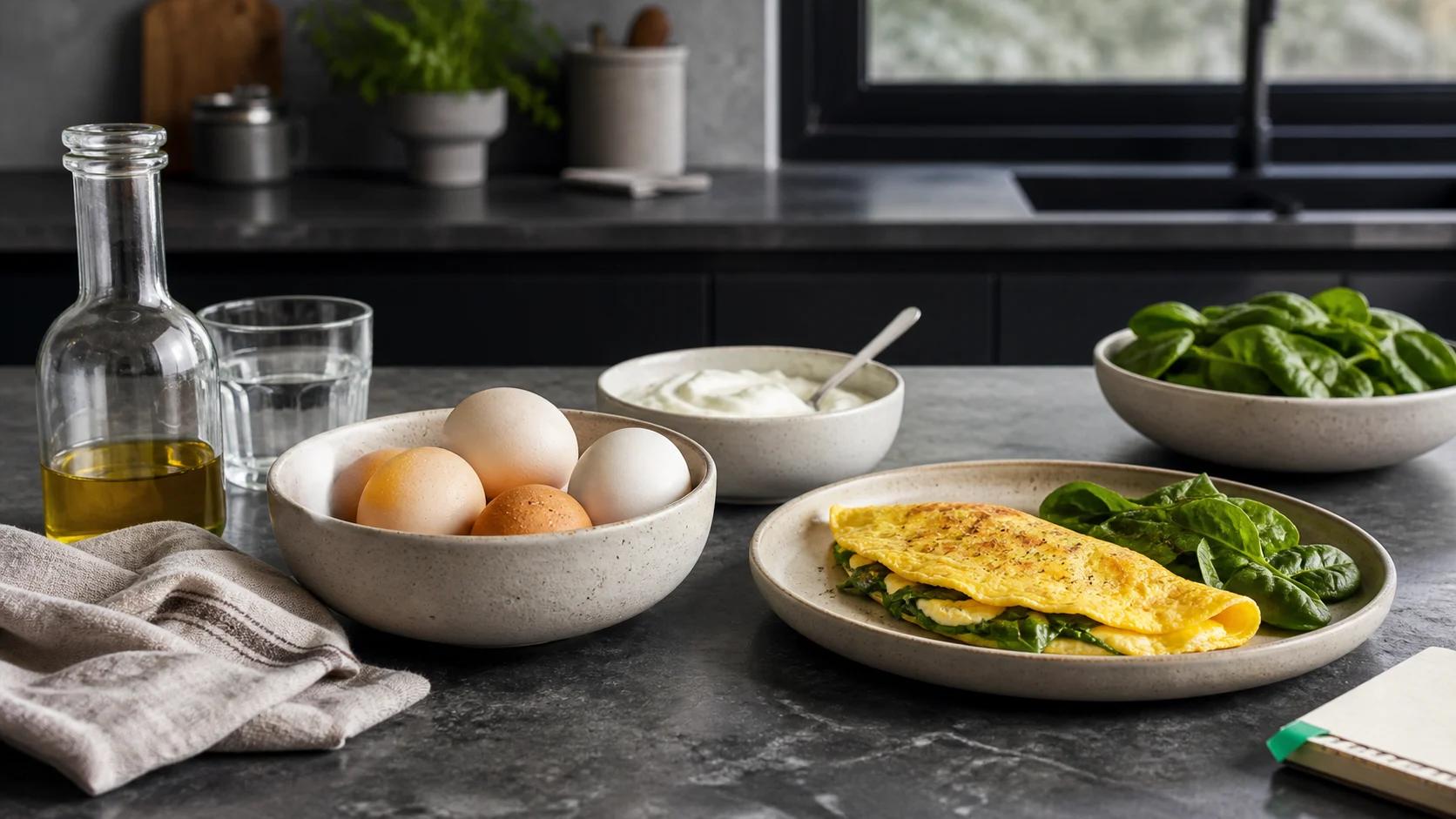
Whether you are trying to stay on track during a maintenance phase or just keeping things simple, eggs are an absolute baseline staple. At roughly 6 grams of protein and only 63 calories for a medium egg, they are the most efficient fuel you can get.

But cooking them shouldn't be a tedious ritual where you are stuck watching a timer like a hawk. You just need an executable system that delivers a firm white and a perfect, jammy yolk every time.

The "Set-and-Forget" Method

This is the ultimate practical setup for a busy routine. It uses residual heat so you can walk away and not worry about overcooking them into a rubbery mess.

  1. Boil the water: Get a saucepan of water boiling—enough to cover the eggs by about 2.5 cm (1 inch).
  2. Drop them in: Take 5 to 10 cold eggs straight from the fridge and lower them into the boiling water.
  3. Kill the heat: Immediately turn the stove completely off.
  4. Let them sit: Leave the pan on the burner. Because the cold eggs immediately drop the water temperature, the cooking process naturally slows down on its own. They will coast perfectly into that ideal, jammy sweet spot without you needing to stress over a split-second timer.

The Traditional Route & Clean Peeling

If you do choose to keep the heat on for a traditional boil, keep the timing simple: 6 to 7 minutes for a soft, jammy center, or 10 to 12 minutes if you want them completely hard-boiled.

To avoid the nightmare of shells sticking and breaking the egg apart, use a quick temperature shock: plunge them into a bowl of ice water for 10 minutes the second they finish cooking. This forces the egg to shrink slightly away from the shell membrane, making them incredibly easy to peel.

The Reality Check

If you look into the official culinary research or guidelines from agencies like the American Egg Board, they will tell you that eggs are only technically 100% food-safe when cooked to an internal temperature of 71°C (160°F)—which means a completely solid, dry yolk. They also love to suggest overcomplicated cooking hobbies, like the Japanese Onsen tamago, which requires holding a precise temperature between 65°C and 68°C (149°F to 154°F) for 20 minutes just to get a custard texture.

While those advanced culinary experiments are interesting, they turn basic nutrition into a job. If you just want a practical, everyday mode that saves time and keeps your meal prep efficient, stick to the residual-heat method. Boil a batch, throw them in the fridge in their shells, and you have perfect protein ready to go for up to one week.

Nur eine E-Mail trennt dich von einer 90-Tage-Transformation.

Gib deine E-Mail ein – ich begleite dich Schritt für Schritt.

Ähnliche Guides

  • Momentum you can borrow

    Momentum you can borrow

    When the weight feels too heavy to start on, restore order somewhere smaller and let it carry over.

  • Honest awareness beats perfect days

    Honest awareness beats perfect days

    Tracking earns its keep even when you're not in a deficit. The day you stop is the day things drift.

  • Between rounds

    Between rounds

    The hardest stuck isn't relapse. It's the maintenance limbo after success, where holding the line costs willpower and the maths still won't move.

  • Check the water first

    Check the water first

    My own signals aren't always clear. Sometimes what felt like hunger was thirst. Here's what I noticed, and what I tried.