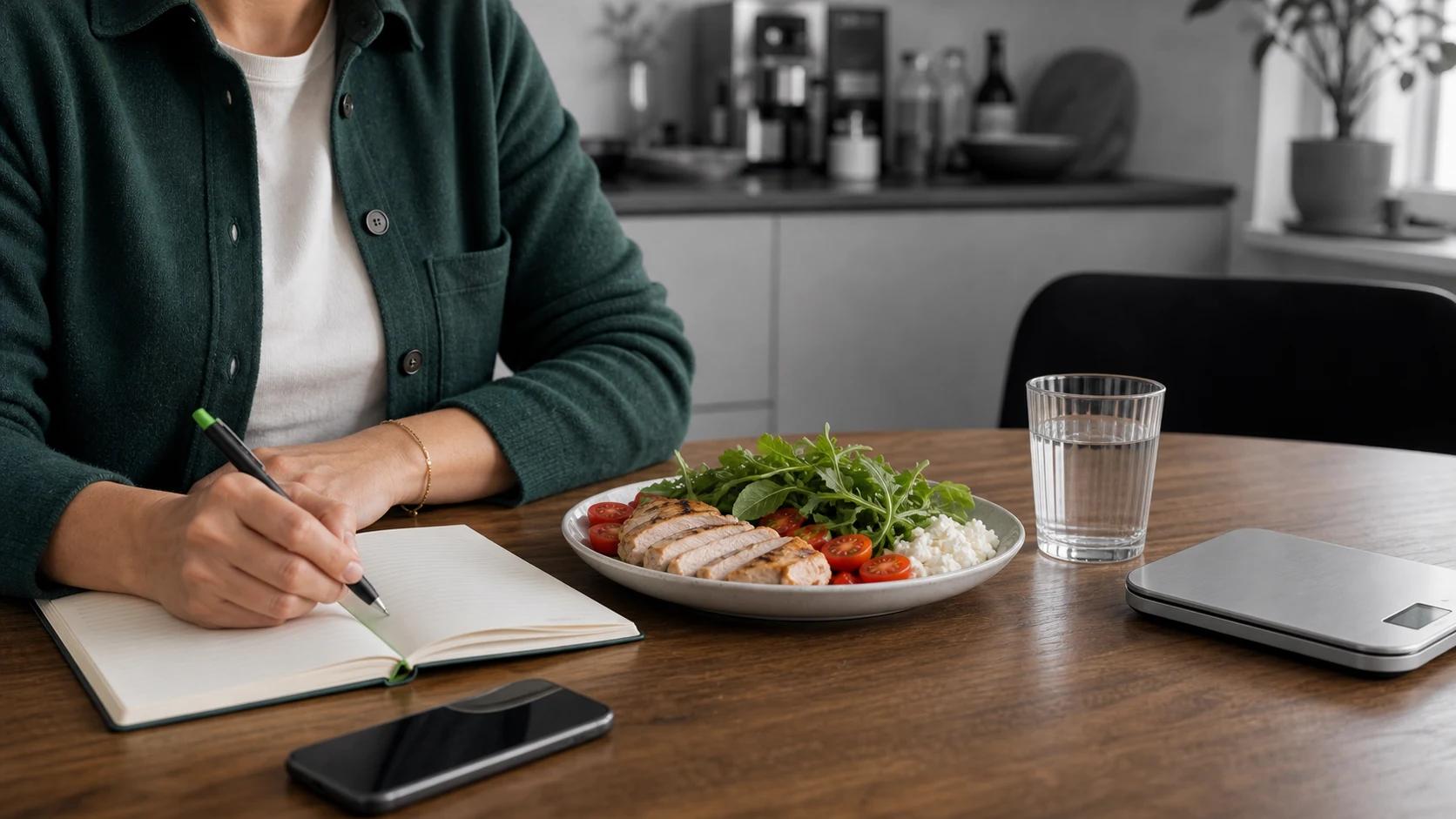
A lot of people who fail at calorie tracking fail because they tried to do it perfectly.
They weighed everything. They rewrote entries. They quit when they realized they had estimated a restaurant meal wrong. The precision became the task instead of a tool for the task.
You do not need perfect calorie counting. You need enough accuracy and enough margin.
What "enough" means
- Log the meal you ate, with a reasonable estimate for the parts you can't measure.
- Pick a deficit that has room in it. 300 to 500 calories under Calorie intake equal to energy expenditure, resulting in stable weight.Full definition → is a workable range. If a 150-calorie error destroys your week, your plan is too fragile, not your tracking.
- Be more honest about what you ate than you are precise about how much. Forgetting the handful of nuts costs you more than estimating the rice by 20 grams.
- Trust the trend, not the day. A single log is nearly meaningless. Ten logs in a row tell you most of what you need to know.
Where precision turns against you
- Chasing AI food recognition to the last calorie while skipping logs on hard days.
- Weighing every gram of a salad dressing while estimating the pizza as "a slice."
- Quitting because today's number is wrong, instead of logging approximately and moving on.
Precision theater does not produce weight loss. Honest, consistent, reasonably-accurate tracking does.
The one thing to do next
Log today's food with reasonable estimates, not perfect ones. If you can't measure it, guess on the high side. Move on with your day. Check the trend at the end of the week, not the end of the meal.
Enough accuracy plus enough margin beats fake precision every time.