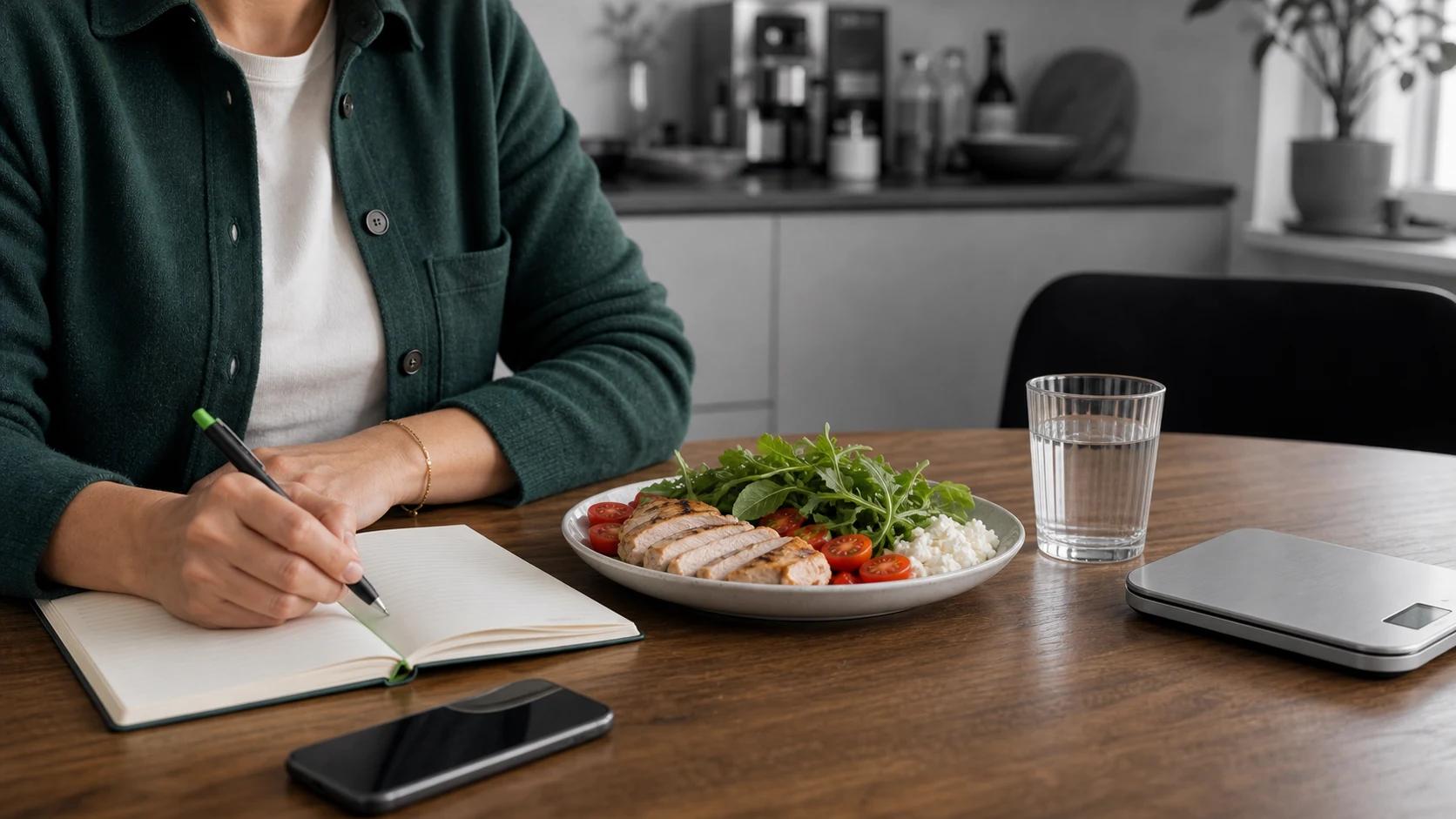
De app wordt pas echt nuttig op het moment dat je begint op te schrijven wat er daadwerkelijk gebeurt – niet de versie die je zou willen dat er gebeurt.
Als je een goede dag bijhoudt, zie je wat een goede dag voor jou inhoudt. Als je een slechte dag bijhoudt, leer je nog veel meer: waar het misging, wat de aanleiding was en welk klein ding, als het anders was geweest, de dag had veranderd.
Wat eerlijk bijhouden echt doet
- Het verandert een vaag gevoel ("Ik heb vandaag te veel gegeten") in een concreet getal waarmee je aan de slag kunt.
- Het beschermt je tegen het verhaal dat je jezelf achteraf vertelt, dat bijna altijd milder is dan de waarheid.
- Het laat je patronen zien – de dagen, situaties of voedingsmiddelen die je steevast van je plan afbrengen.
- Het houdt de app eerlijk. Een app die alleen je beste dagen ziet, kan je niet helpen met de rest.
Wat het niet is
Het is geen test die je wel of niet haalt. Het is geen optreden. Het is geen reeks.
Het doel is niet om het logboek er goed uit te laten zien. Het doel is om helder genoeg te zien om actie te ondernemen.
Het enige wat je nu moet doen
Houd je volgende echte maaltijd bij. Niet je volgende ideale maaltijd – de volgende die daadwerkelijk plaatsvindt. Zelfs als je te veel hebt gegeten. Zelfs als het gênant is op papier. Juist dan.
Een rommelig logboek leert meer dan geen logboek. Het perfecte logboek dat alleen in je hoofd bestaat, leert je helemaal niets.