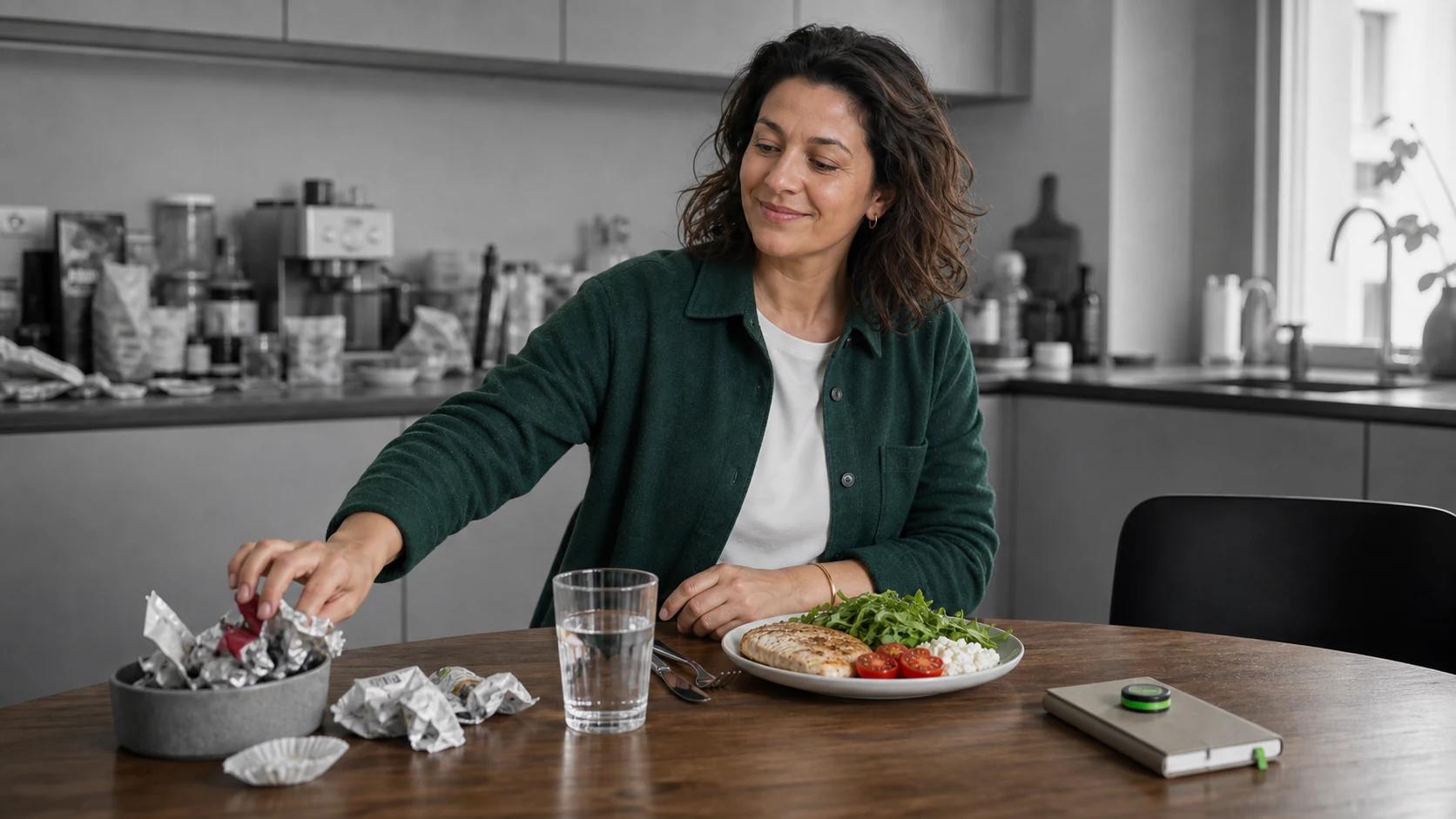
Quando il cibo governa la giornata
Arriva un punto in cui il cibo smette di essere semplice e comincia a organizzare tutta la giornata. Ti scopri a pianificare il prossimo pasto mentre stai ancora mangiando quello attuale. Passi la mattina a trattare con te stesso: che cosa puoi mangiare, che cosa dovresti evitare, se una scelta ha già rovinato la settimana.
Questa trattativa continua è estenuante. Mangiare troppo sembra libertà, ma funziona più come una compulsione: un breve piacere, poi il senso di colpa. L’umore segue i pasti. La concentrazione sale e crolla insieme all’energia.
Vuoi pesare meno. Ma ciò che desideri davvero è che il cibo occupi meno spazio nella tua testa. Vuoi che torni a essere una parte normale della vita invece dell’evento principale di ogni giornata.
È qui che la struttura diventa un sollievo invece di un peso. Una finestra di digiuno e un diario alimentare semplice eliminano discussioni infinite. Quando i confini sono chiari, molte decisioni sono già prese. Smetti di negoziare con la fame perché è l’orario a stabilire il limite. Quando il rumore continuo si spegne, recuperi concentrazione e scopri quanto diventa leggera la giornata quando il cibo non la governa più.
Motivatori correlati

La persona più pesante nella stanza
Entrare in una stanza e sapere subito di essere la persona più pesante è estenuante. Quel disagio preciso può diventare un motivo chiaro per cambiare.

Riconquistare il Rispetto di Sé
Quando sei significativamente in sovrappeso, di solito non è l'unica cosa che non va nella tua vita: è un altro sintomo di abitudini, schemi e problemi che si accumulano. Non ti senti solo giudicato dagli altri: ti giudichi nello stesso modo, e questo crea un ciclo di vergogna che corrode il rispetto di sé. Perdere peso non risolve ogni problema, ma può essere la scintilla che cambia tutto: quando prendi il controllo, dimostri a te stesso e a tutti intorno che il cambiamento è possibile.

Proteggi la tua presenza
Restare in cattive condizioni fisiche è una scommessa contro le persone che contano su di te. L’obiettivo è restare funzionale, mobile e presente negli anni a venire.